Need Help? Call or Text: (918) 420-9999
Need Help? Call or Text: (800) 420-9767

An Independent Insurance Agency
Questions? Call (918) 420-9999
Need Help? Call or Text: (800) 420-9767

"Wait. I Thought I Already Paid for This?"
Usually it comes from someone holding a bill they never expected. Here is the truth nobody sits you down and explains: the payroll taxes you paid covered most of your hospital insurance. But doctor visits, outpatient care, and prescriptions come with monthly premiums, annual deductibles, and coinsurance, and the amounts change every single year.
Maybe this sounds familiar:
- My premium went up and nobody told me why.
- I thought Medicare covered my hospital stay. Then the bill came.
- Why am I paying 20% of everything with no limit?
- What is this IRMAA letter from Social Security?
The good news: once you see how the pieces fit together, the costs stop being scary. With the right plan, most of them can be reduced, capped, or covered entirely. That is exactly what we help you do, at no cost to you.
What Medicare Costs in 2026
Every part of Medicare has its own price tag. Here is what each one actually means for your wallet.
Free, until you use it
Most people pay $0 a month for Part A because they (or a spouse) worked at least 10 years. Premium-free is not cost-free when you are admitted: the hospital deductible is $1,736 per benefit period, not per year, so you could pay it more than once in the same year. Days 61 to 90 cost $434 a day, lifetime reserve days run $868 a day, and skilled nursing care runs $217 a day after day 20. Did not work enough quarters? Buying in costs $311 to $565 a month.
The premium everyone pays
Part B covers doctor visits, outpatient care, lab work, and preventive services. The standard premium is $202.90 a month with a $283 annual deductible, and after that you pay 20% of every Medicare-approved bill. Most people have the premium deducted from their Social Security check, which is why so many retirees felt this year's $17.90 increase without ever writing a check. Higher incomes pay more (see IRMAA below).
Finally, a hard ceiling
Once you have spent $2,100 out of pocket on covered drugs, you pay $0 for them the rest of the year. Standalone plans average about $34.50 a month, with a deductible of no more than $615. Plans differ wildly in which drugs they cover and which pharmacies they prefer, so the wrong one can cost you thousands before you ever reach the cap.
Part A Hospital Costs at a Glance
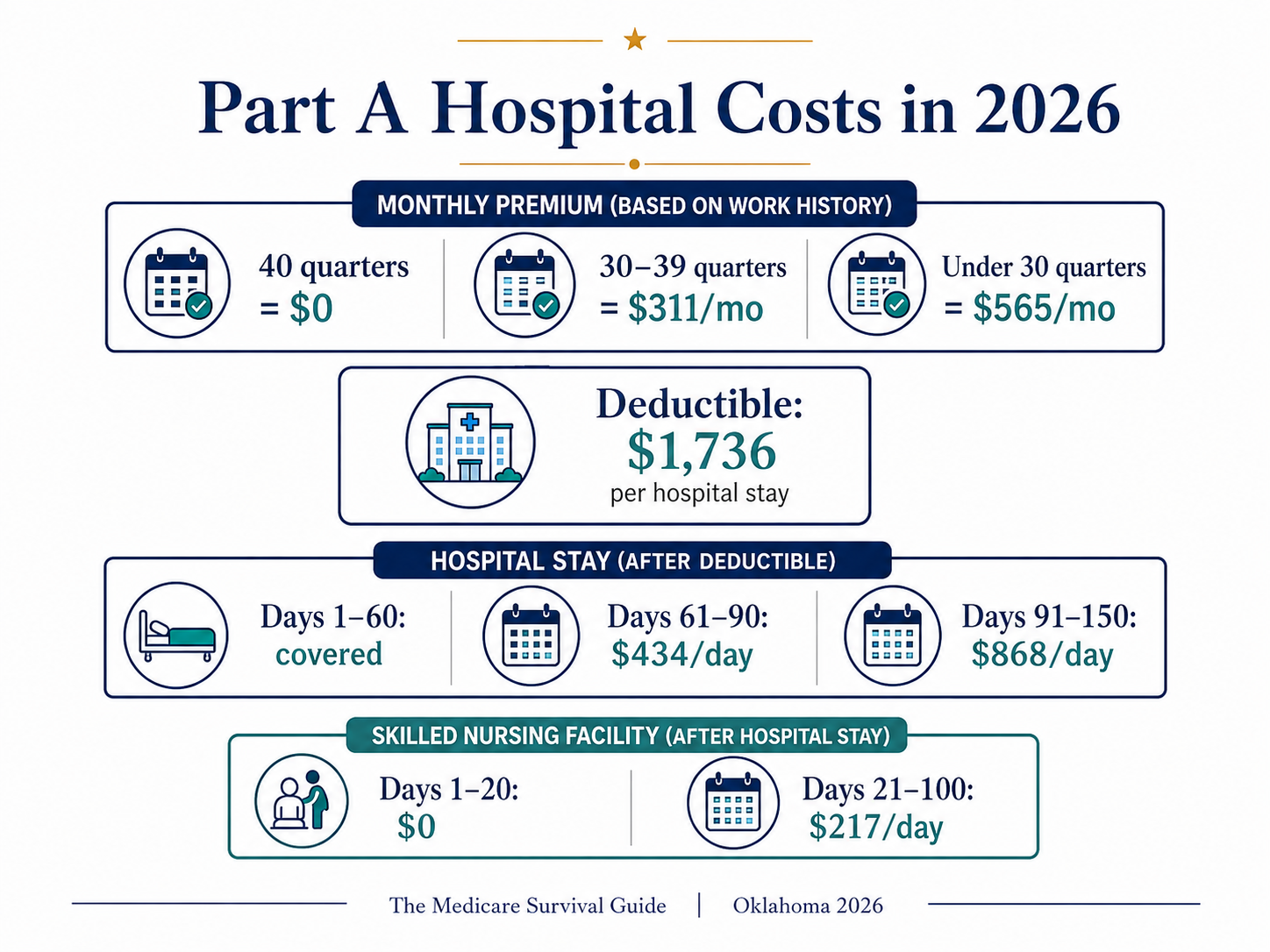
There Is No Limit on the 20%, and That Is the Part That Keeps People Up at Night
After your deductible, Original Medicare pays 80% and you pay 20% of every Medicare-approved charge, with no annual out-of-pocket maximum. None. 20% of a $400 X-ray is manageable. 20% of a $200,000 cancer treatment is not. This single gap is the reason most people do not stay on Original Medicare alone, and it is also the most fixable problem in all of Medicare: a Medicare Supplement can pick up that 20% for you, or a Medicare Advantage plan can cap your yearly costs.

Five More Ways We Help Clients Pay Less
- Re-shop your drug plan every year. Last year's best plan is often this year's overpayment.
- Check for Extra Help. It can slash Part D premiums and copays, and millions who qualify never apply.
- Check Medicare Savings Programs. Depending on your income, your state may pay your entire Part B premium.
- Plan around IRMAA. Time large withdrawals, and appeal when life changes drop your income.
- Match your plan to your doctors and budget, not a commission.
Our help costs you nothing. We are paid by the insurance companies, and you pay the same premium either way.
Make Your Premium Automatic With Medicare Easy Pay
If your Medicare premium is not being deducted from your Social Security check, Medicare Easy Pay can make things much simpler. It is a free service that automatically withdraws your premium from your checking or savings account each month.
Once it is set up, Medicare generally withdraws the payment on the 20th of each month, or the next business day. If your premium changes, the withdrawal amount updates automatically.
Good to know: Easy Pay can take 6 to 8 weeks to begin, so keep paying your Medicare bill normally until you see that the automatic payments have started.
Two ways to enroll
Online
Sign in to your Medicare.gov account and select My Premiums, then Sign Up for Medicare Easy Pay.
By mail
Complete and mail the SF-5510 Medicare Easy Pay Authorization Form.
IRMAA Surcharges and Late-Enrollment Penalties
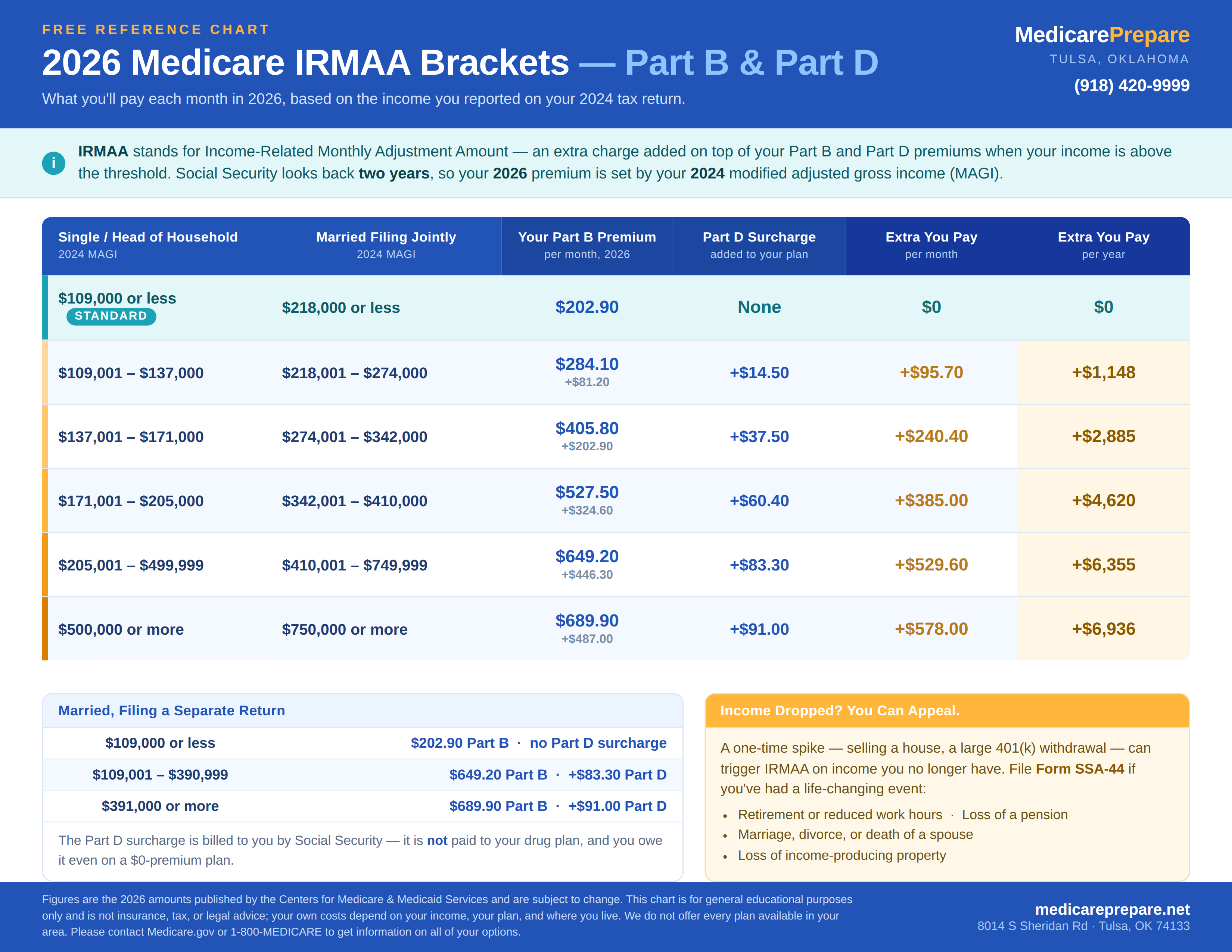
If your income from two years ago was above $109,000 (single) or $218,000 (married filing jointly), Medicare adds an IRMAA surcharge, roughly $81 to $487 extra per month for Part B alone. A one-time income spike, like selling a house or a big 401(k) withdrawal, can trigger it, and many people qualify to appeal when their income drops. We help you see it coming and file the paperwork to fight it.
Late enrollment is the other cost that never goes away: 10% added to your Part B premium for every 12 months you were late, permanently, and 1% per month for Part D. If you are approaching 65, or past it and still working, the cheapest thing you can do is confirm your enrollment timing before a deadline passes.

We Compare Your Exact Medication List Against Every Plan, Every Year
The drug plan that was cheapest last year is often the most expensive this year, because formularies, pharmacy networks, and copays all change on January 1. We run your actual prescriptions through every plan in your area, then show you what each one would really cost, side by side.
Common Questions About Medicare Costs
Why did my Part B premium go up?
The standard premium changes every January, and Social Security deducts the new amount automatically. If it jumped by a lot more than everyone else's, you may be paying an IRMAA surcharge based on your income from two years ago, which can be appealed after a life-changing event like retirement.
Is there a cap on what I can spend under Original Medicare?
No. Original Medicare has no annual out-of-pocket maximum for the 20% you owe after the Part B deductible. A Medicare Supplement or a Medicare Advantage plan is how people put a ceiling on that number.
What is IRMAA and can I get out of it?
IRMAA is an income-related surcharge added to Part B and Part D premiums when your income from two years earlier was above the threshold. If your income has since dropped because of retirement, a spouse's death, divorce, or another qualifying event, you can file form SSA-44 to have it recalculated.
Do I really have to pay a Part A deductible more than once?
Yes, if you have more than one benefit period in a year. A benefit period starts when you are admitted and ends after 60 days in a row with no inpatient care. Two separate stays a few months apart can mean two deductibles.
How does Extra Help lower drug costs?
Extra Help is a federal program that pays part or all of your Part D premium, deductible, and copays if your income and resources are under the limits. Many people who qualify never apply. See our Prescription Drug Plans page for this year's limits.
Stop guessing what Medicare will cost you.
In one complimentary conversation we show you exactly what you would pay under each of your options: premiums, deductibles, drug costs, doctors, everything, side by side, in plain English.
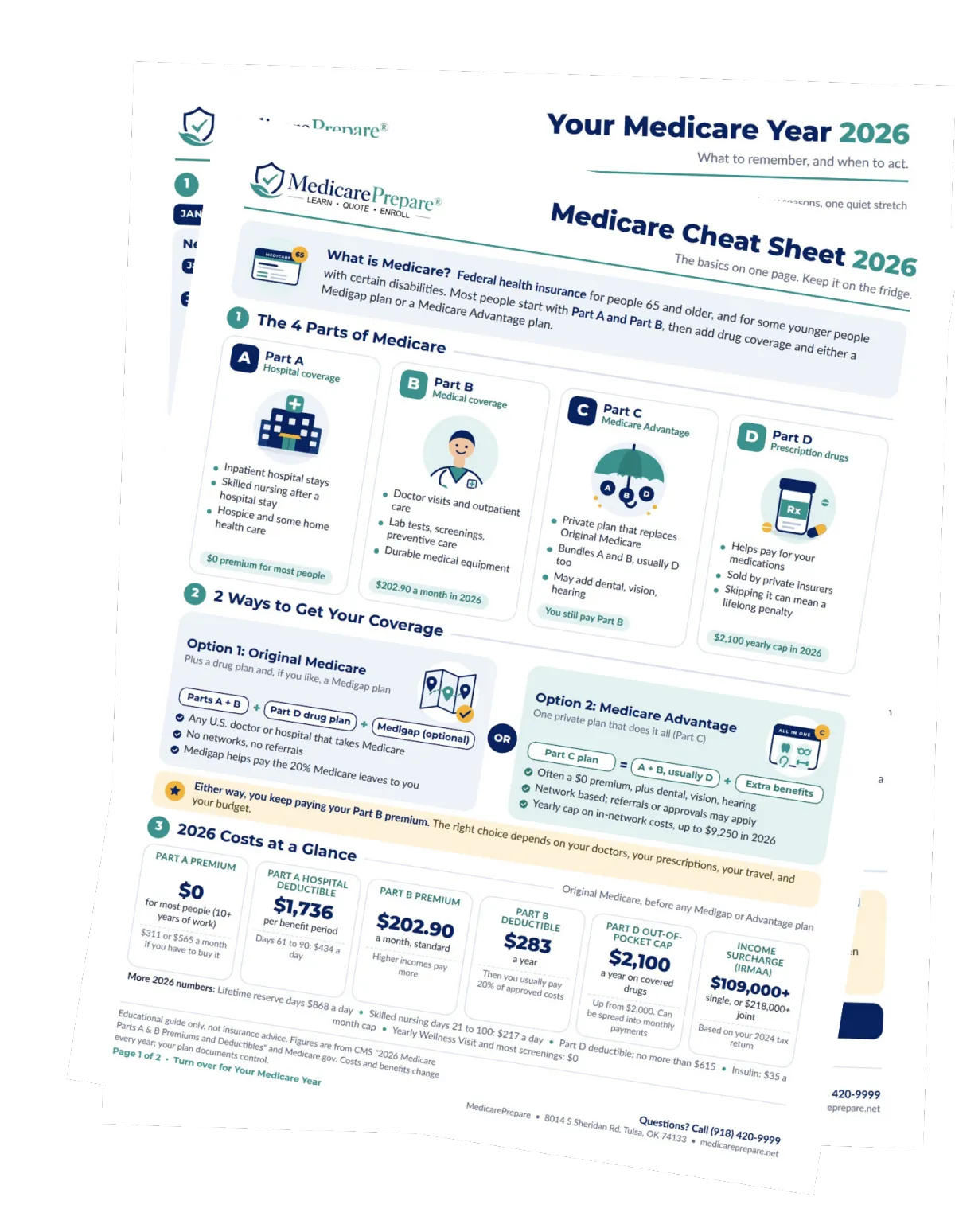
Claim Your Complimentary
Medicare Cheat Sheet
1 pager front and back of quick references on what Medicare is, what is costs, and some of the enrollment periods to remember.