Need Help? Call or Text: (918) 420-9999
Need Help? Call or Text: (800) 420-9767

An Independent Insurance Agency
Questions? Call (918) 420-9999
Need Help? Call or Text: (800) 420-9767
Why You Should Not Skip Part D
Original Medicare does not cover prescription drugs, and going without creditable drug coverage can cost you later, even if you do not take many medications right now.
Maybe this sounds familiar:
- I don't take many prescriptions, so I figured I could skip it.
- I didn't realize there was a penalty for enrolling late.
- I don't know the difference between a standalone plan and one bundled into Advantage.
- I'm worried my medications won't be covered, or will cost more than expected.
None of that means you are behind. It means no one has walked you through how Part D actually works yet, including the penalty for waiting and the ways to lower your costs if money is tight.
Two Ways to Get Part D Coverage
There is no single "Part D plan." You get drug coverage one of two ways, and it is worth knowing the difference before you enroll.
Standalone Prescription Drug Plan
Adds drug coverage on top of Original Medicare (Parts A and B). The right fit if you have Original Medicare, or a Medicare Supplement, and just need coverage for your prescriptions. Plans vary by which drugs they cover (their formulary), monthly premium, and pharmacy network, so it pays to compare before you enroll.
Part D bundled into Medicare Advantage
Most Medicare Advantage plans include Part D built right in. Your medical and drug coverage come from the same plan, often for one combined monthly premium. Convenient, as long as your specific medications are on that plan's formulary.
What Part D Actually Costs in 2026
All Part D plans, standalone and Medicare Advantage, follow the same standard cost structure, broken into stages.
Deductible
Up to $615 before your plan starts sharing costs. Some plans have a lower or $0 deductible.
Initial coverage
You pay 25% of the cost for covered drugs and your plan pays the rest.
Out-of-pocket cap
Once you have spent $2,100 total on covered drugs in the year, you enter catastrophic coverage.
Catastrophic coverage
After that, you pay $0 for covered Part D drugs for the rest of the year.
If money is tight, the Extra Help program below can lower or eliminate these costs entirely.
Extra Help: Lower Your Drug Costs in 2026
Extra Help is a federal program that helps pay your Part D premium, deductible, and copays. Here is what qualifies this year.
| Single | Married | |
|---|---|---|
| Monthly income | $2,015 about 150% of poverty level | $2,725 about 150% of poverty level |
| Annual income | $24,180 | $32,700 |
| Resource limit | $16,590 savings, stocks and bonds | $33,100 savings, stocks and bonds |
| With burial exclusion | $18,090 up to $1,500 per person set aside | $36,100 up to $1,500 per person set aside |
Resource limits do not count your home or car. Income and resource figures are estimates for the plan year and may be adjusted slightly by the Social Security Administration.
Copays
Generic drugs $1.60
Brand-name drugs $4.90
Copays
Generic drugs $5.10
Brand-name drugs $12.65
Premium and deductible
Monthly premium $0*
Annual deductible $0
*Up to your region's benchmark premium
Automatic qualification: no application needed if you already have Medicaid, a Medicare Savings Program, or Supplemental Security Income (SSI).

What Extra Help Covers, and How to Apply
If you qualify, Extra Help can cover your Part D monthly premium (up to your region's benchmark amount), a $0 annual deductible, and reduced copays as low as $1.60 for generic drugs and $4.90 for brand-name drugs (or $5.10 and $12.65 if your income is 100% to 150% of the poverty level).
To apply, contact Social Security at ssa.gov/extrahelp, call 1-800-772-1213 (TTY 1-800-325-0778), or visit your local Social Security office. There is no deadline. You can apply any time, and if you qualify, we can also help you choose a plan that fits your medications.
The Part D Late Enrollment Penalty
If you go 63 or more days in a row without Part D or other "creditable" drug coverage after you are first eligible for Medicare, you can be charged a penalty, permanently added to your monthly premium for as long as you have Part D.
Maybe this sounds familiar:
- I don't take any medications, so I figured I could skip it.
- I already had employer coverage, so I wasn't sure if I needed to enroll separately.
- I didn't realize the penalty was permanent, not one-time.
- No one told me there was a deadline to worry about.
The penalty is roughly 1% of the national base beneficiary premium for every month you went without creditable coverage, added to your premium for life. Extra Help can also offset this if you qualify.
How to avoid the penalty
Enroll in a Part D plan (standalone or through Medicare Advantage) during your Initial Enrollment Period, or keep other creditable coverage, like from an employer or union, that is at least as good as Medicare's. Losing other coverage usually opens a Special Enrollment Period so you can sign up without a gap.
When to enroll in Part D
Your Initial Enrollment Period runs 7 months: 3 months before you turn 65, your birthday month, and 3 months after. After that, you can join, switch, or drop a Part D plan during Fall Open Enrollment (October 15 to December 7) each year, with changes taking effect January 1.

Comparing Plans and Checking Your Formulary
Every Part D plan has a formulary: a list of covered drugs, sorted into tiers that determine your copay. Before you enroll, check that your specific medications are covered, at what tier, and whether your regular pharmacy is in the plan's network. Premiums and total costs can vary widely between plans covering the exact same drugs.
We compare your exact medication list against every plan in your area, every year, and show you the total cost, not just the premium.
Quick Recap: PDP vs. MA-PD
Standalone plans (PDP)
Best if you are happy with Original Medicare (or a Medicare Supplement) and just need to add drug coverage. You pick your drug plan independently; the coverage is not tied to a medical plan.
Bundled plans (MA-PD)
Best if you would rather have one plan and one card for both medical and drug coverage. Double-check your medications are on the plan's formulary before you enroll, since coverage varies by plan.
Common Part D Questions
Can I switch plans if my medications change?
Yes, during Fall Open Enrollment each year (October 15 to December 7), or sooner if you qualify for a Special Enrollment Period.
Does Part D cover vaccines?
Most vaccines are covered under Part D at no cost to you, thanks to recent changes to the program.
What if I have both Medicare and Medicaid?
You likely qualify for Extra Help automatically, and Medicare may enroll you in a Part D plan for you. We can check that the plan you were placed in actually covers your medications.
Can I have a standalone plan and Medicare Advantage at the same time?
No. Enrolling in a standalone PDP while you are in a Medicare Advantage plan that already includes drug coverage can drop you from your Advantage plan, so check with us before you switch anything.
What counts as creditable coverage?
Drug coverage that is expected to pay, on average, at least as much as standard Medicare Part D. Most employer and union plans qualify and must tell you in writing each year. VA drug coverage is also creditable.
Ready to find your Part D plan?
Whether you need a standalone plan, want drug coverage bundled into Medicare Advantage, or think you might qualify for Extra Help, we will walk through your medications and budget with you. Complimentary, no obligation.
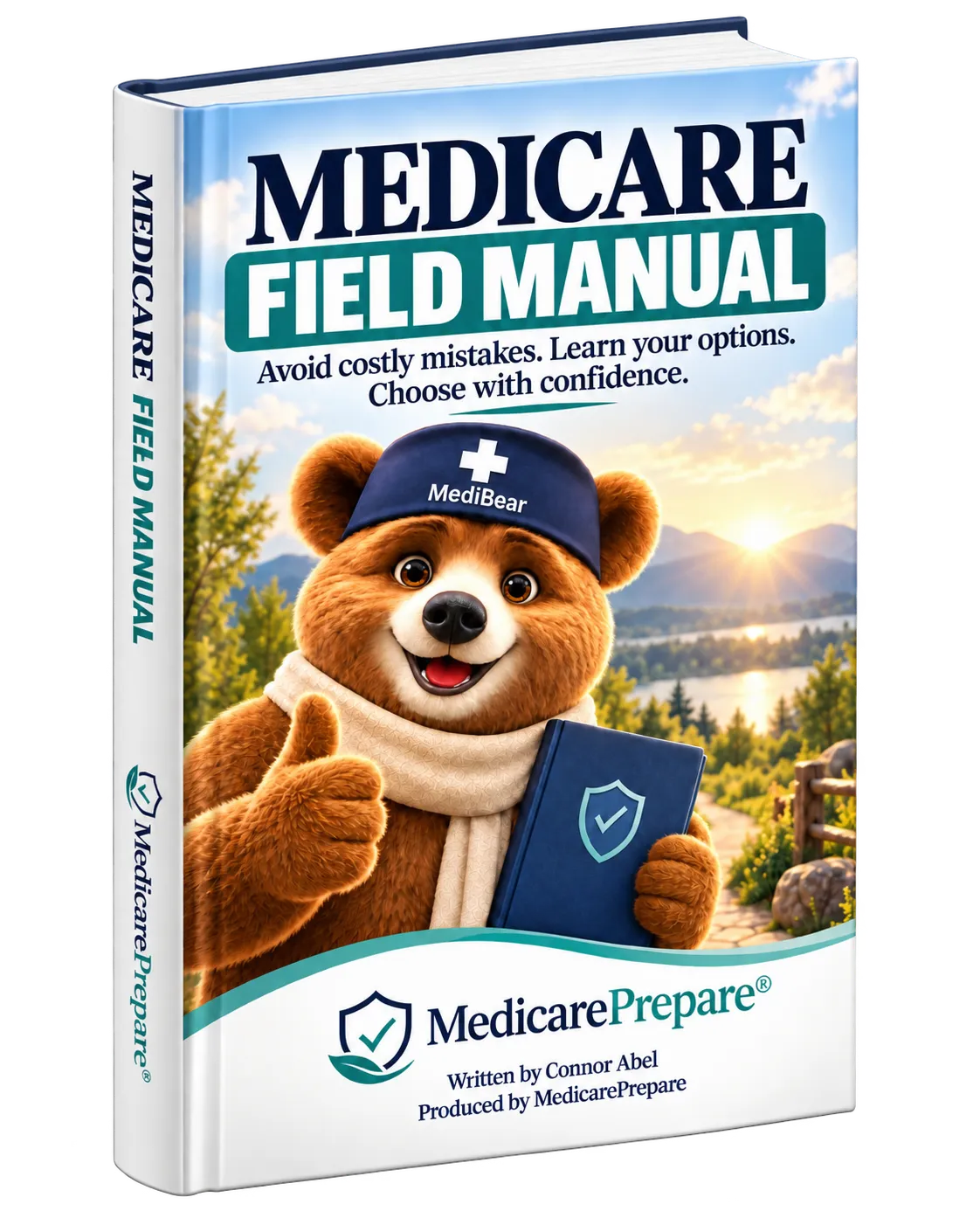
Grab Our Free
Comprehensive Guide to Medicare!
Medicare can be a nightmare to understand. We've helped hundreds of Baby Boomers navigate this journey, and we hope this book can help you too!